Vladimir Yaprintsev talks about honorary membership in the FIAS Executive Committee, a forty-year friendship, and why the gray-haired man comes to children's gyms.
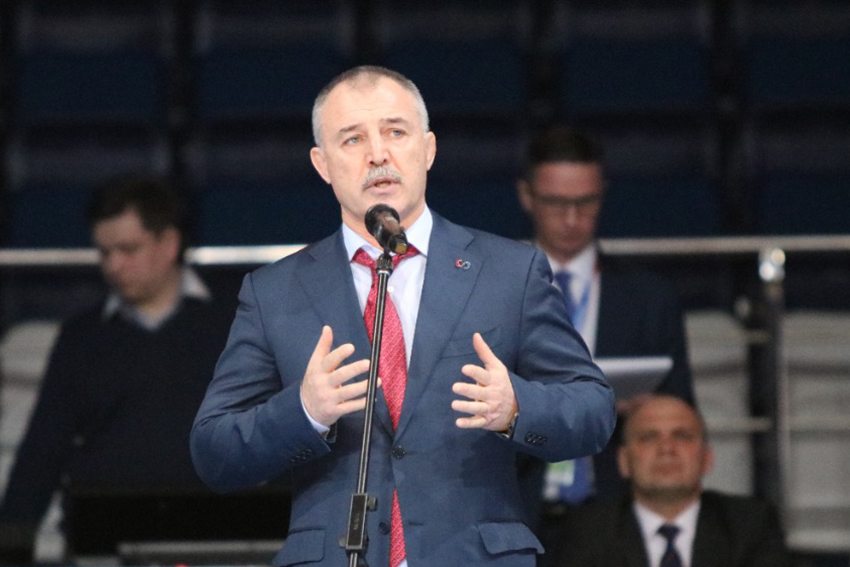
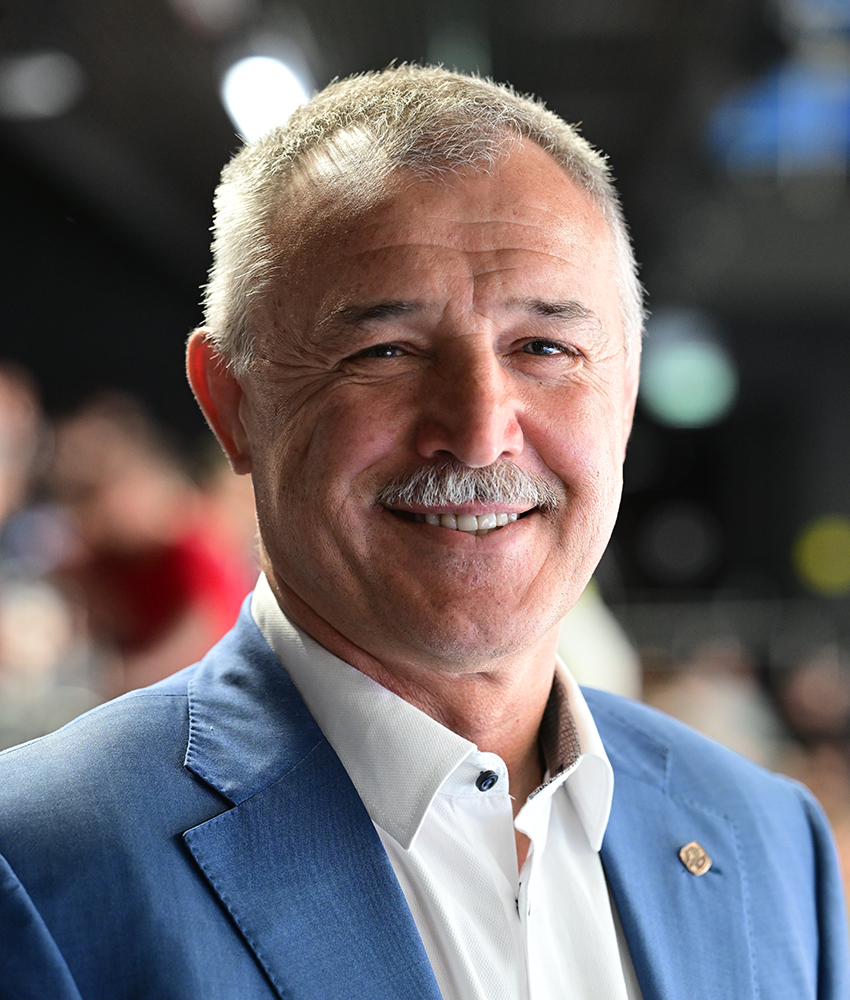
Last November, the FIAS Congress in Bishkek made a historic decision: two veterans of international sambo—Vladimir Yaprintsev of Belarus and Roberto Ferraris of Italy—became the first honorary members of the FIAS Executive Committee. Both have risen from the mat to the top ranks of their national federations, and both have been involved in international sambo for so long that they have already served their mandatory terms on the Executive Committee. We spoke with Vladimir Yaprintsev about what this position means to him personally, his friendship with Roberto, adaptive sambo, veterans, and, of course, what sambo is.
– Vladimir Gennadievich, tell us how the decision to grant honorary membership came about – was it a surprise for you?
"It was a very pleasant surprise! According to the charter, Roberto Ferraris and I had already served all permitted terms on the Executive Committee. We couldn't remain active members. The International Sambo Federation had actually been working on this issue for a long time. And in the end, the Executive Committee members, headed by President Vasily Borisovich Shestakov, asked Roberto and me to stay on, given our accomplishments.".
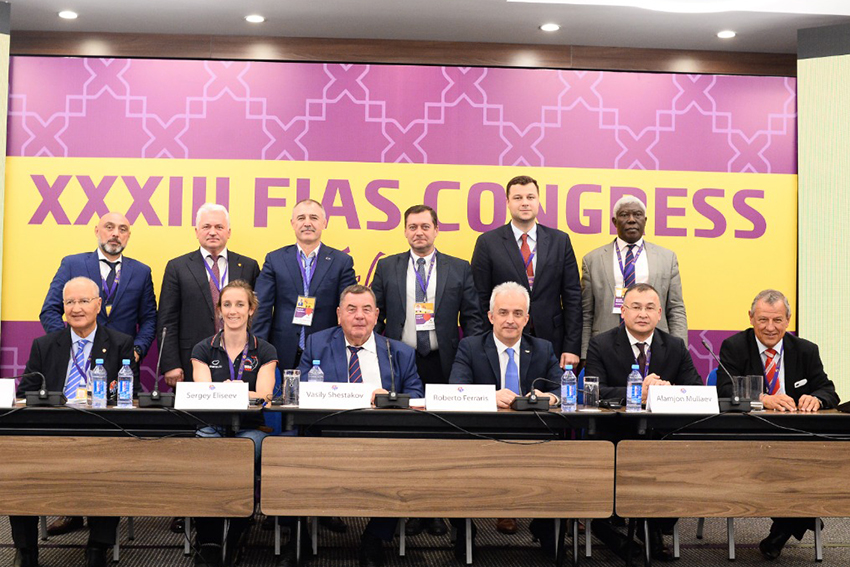
The Congress in Bishkek supported the proposal to make us honorary members of the FIAS Executive Committee – for life. This is the term specified for this position in the Charter of the International Sambo Federation. This is the first such experience in the history of our federation, and I am very grateful to all the people involved in the international life of Sambo. After all, we all come from Sambo backgrounds.
– You’ve known Roberto Ferraris for a very long time…
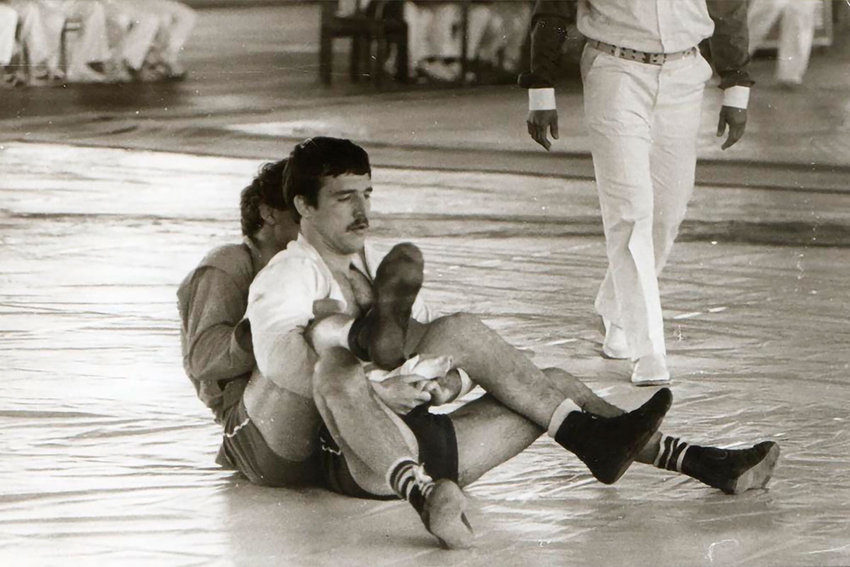
"Since 1986. We first met at the European Championships in Leningrad. He competed for the Italian national team, and I competed for the Soviet Union. I competed in the 68 kg class and won the championship. Roberto competed in the 57 kg class and placed fifth, I think. Even back then, he was like that—inquisitive, curious, interested in everything.".
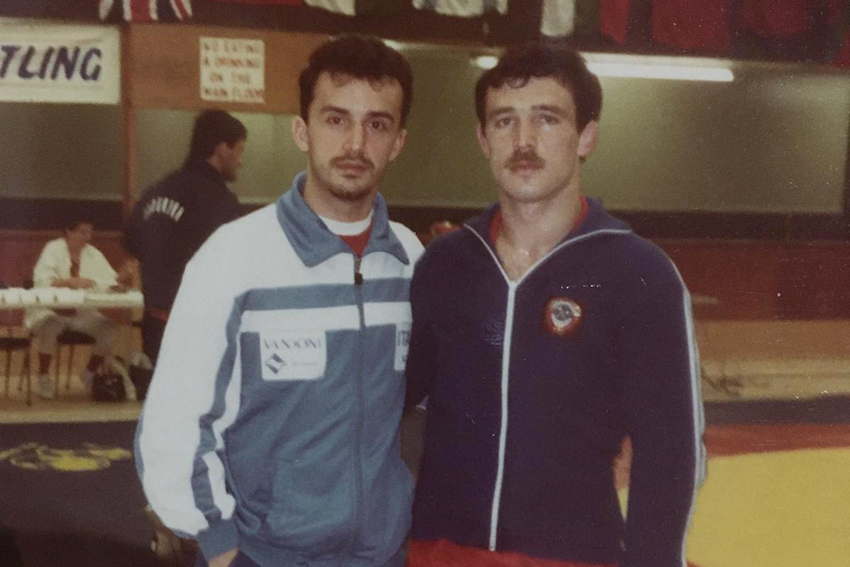
I remember everyone back then was doing the "change"—swapping uniforms. Instead, Roberto and I simply gave each other gifts. We'd run into each other all the time after that—at World Championships, the World Cup in Morocco, and at international tournaments. He even came to visit me in Minsk. Incidentally, that's where he met his wife.
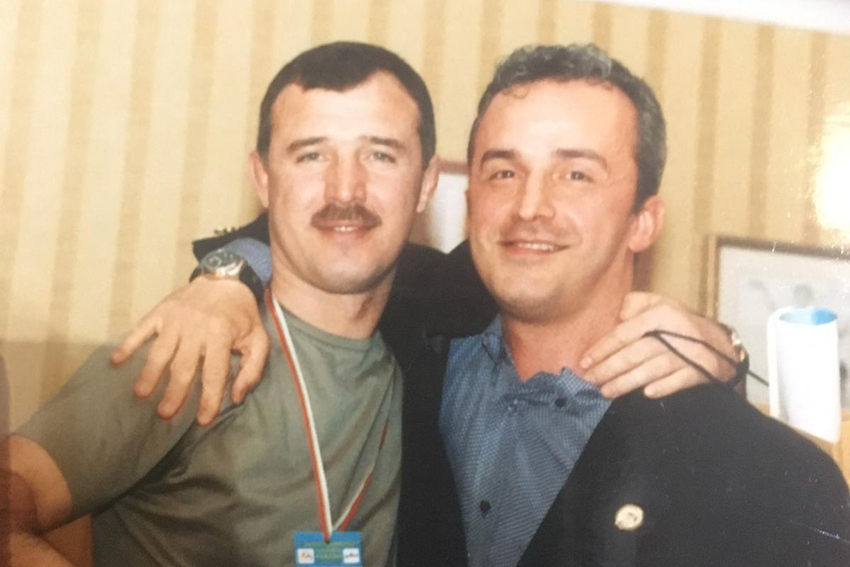
When we both retired from active competition, we moved in parallel again: I became chairman of the Belarusian Sambo Federation in 1994 and remained so until 2015. Roberto has long been the head of Italian Sambo and remains the Secretary General of the European Sambo Federation. We were both members of the FIAS Executive Committee, Roberto was the FIAS Secretary General for a long time, and as functionaries, we regularly participated in major international Sambo events. And so we continue to walk – side by side.

This year marks the 50th anniversary of the World Sambo Championships. What does this number mean to you personally?
"Every date means something. And 50 is half a century; for the fiftieth time, sambists will gather on the same mat to determine who is the strongest in the world. So many people have become champions during this time—and each of them, in their year, was the best on the planet in their weight category. In this regard, I want to praise FIAS: despite all the turbulence currently unfolding in the world, we held all the world championships in all age categories—cadets, youth, juniors, adults—in sport, beach, and combat sambo. We didn't just hold our own—we expanded. Sambo for the blind and visually impaired has emerged.".
It's also important to me personally that the anniversary championship is being held in Tashkent. It's a significant city for me: it was there that I competed for the first time as a teenager, winning the All-Union Central Council of Trade Unions of the USSR Sambo Championship among young men in the 52 kg weight class. I later became the Soviet Union champion there. Tashkent is a rich city, as they say. I'm confident that they will host competitions at the highest level, because wrestling is more than just a sport for Uzbekistan.
– You mentioned Sambo for the blind and visually impaired. What's your opinion on this approach?
"You know, the press always writes about heroes. When true personalities emerge, attention naturally follows. It's the same here. When Roman Novikov emerged—the one who propelled Sambo among the blind and visually impaired like a locomotive—other heroes emerged, and interest in this field grew exponentially.".
Take it Oleg Kretsul From Moldova. A renowned judoka, he was training for the Olympics—and a tragic fate befell him: he lost his sight. But he still took to the mat. I remember coming to the World Championships in Sochi in 2017. a guy without legs – from South America – and came out to wrestle. The entire stadium and, no doubt, the spectators watching on TV applauded him.
Something changes inside you after that. When spectators watch the World Championships, where Blind Sambo is part of the program, they say, "If these guys go out on the mat and show such a fight, what excuse do I have for not going to practice?" That's the right question.
I generally believe that a man's life is about overcoming. And these guys are our brothers. They just have it much harder than we do. So it's definitely not appropriate for us to whine.
This year, Islam Makhachev became the second Sambo ambassador, following Fedor Emelianenko. What do you think about this?
"I really liked the slogan on Khabib's T-shirt—that if sambo were easy, it would be called something else. It was a perfectly accurate slogan. And thanks to Islam. He took on the burden: now, competing in MMA, he's responsible for all things sambo. Because there's nothing stronger than sambo in the world of martial arts, I believe that 100 percent.".
And do you know how combat sambo differs from MMA? We don't hit someone while they're down. If your opponent falls, you go to the ground (or more accurately, to the ground in sambo) or lift them up, but don't finish them off. There's nobility in that. I believe in it.
You continue to compete in the mat yourself—in masters competitions and during training sessions. What keeps you going?
"A man doesn't end at 30 or 40. A man's value is not in his words, but in his actions. A man who is 60 or 70, who steps onto the mat without fear and delivers results—that means something.".
I'll tell you a story. Aslambek Akhmedovich Aslakhanov and I were at the World Masters Championships. He was 65 years old at the time, and he arrived injured. I asked, "Why did you come in such a state?" And he replied, "I want my son Damir to see that his father can be a man even at his age." His son was five years old at the time. That's an example.
Another thing that impresses me about masters competitions. I like the term "masters" better than "veterans"—they really are masters. When they finish a match, they always hug. I've never seen masters just part ways after the final. The harder the fight, the tighter the hug. That's probably the whole point of such competitions.
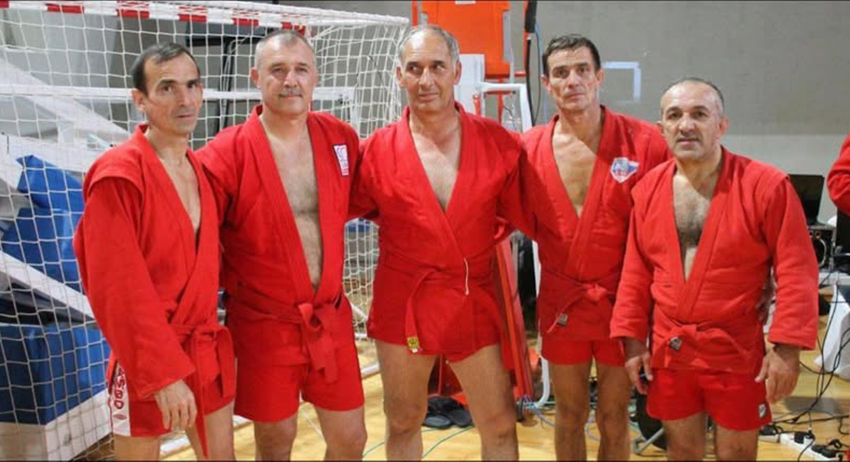
This year, the World Masters Championships will be held in Cyprus. I'll try to attend. National teams don't come there—everyone who wants to and can compete comes. It's a celebration.
– Tell us about your project "We Come from Sambo." What's currently being done within it?
"This project belongs to all sambo wrestlers around the world. We deliberately didn't place any legal restrictions on the brand—let it reach the people. We don't want to monetize it, because it's our life.".

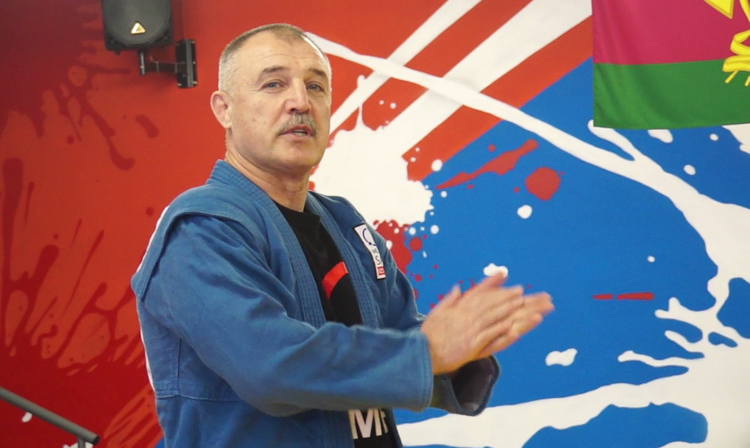
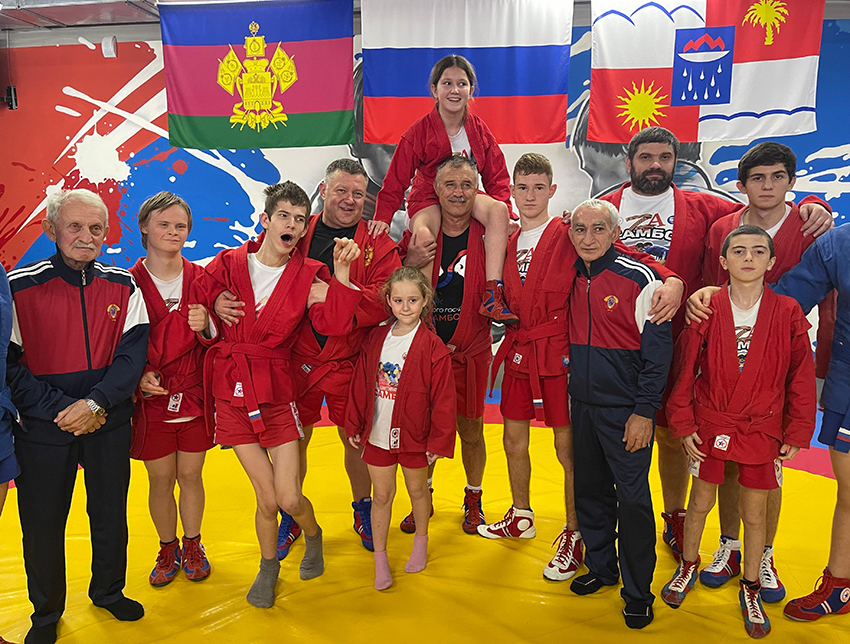
As part of the project, we hold competitions, primarily among young men. We recently held them in Grodno. Previously, we held competitions in Brest, Makhachkala, Grozny, Sochi, and Irkutsk. Wherever we go, I consider it my civic duty to pass on my skills to those who need them. I always look for opportunities to conduct master classes for young people.
Anyone who has ever donned a sambo jacket or stepped onto the mat can already say, "We come from sambo." I'm proud that so many people who occupy a worthy place in life and in a variety of fields are sambo wrestlers.
– You travel to give master classes to children. What do you tell them?
"I always tell the kids: your coaches know Sambo as well as I do, but maybe I'll share our secrets with you. And I tell them why they come to training. Not to learn throws and sweeps—you'll learn throws anyway. But to learn how to be friends and to lend a shoulder to a friend in difficult times.".

I often do this exercise with them: they come up to each other, look each other in the eye—calmly, without hatred, just like a confident person looks at each other—and then they hug each other. I tell them: smell each other. Because wrestlers are the closest in the sport. If a normal guy washes his own uniform, then his opponent and partner knows what he smells like better than his mother. That's why we're so close.
There are funny stories, too. I show up at the gym—nobody knows who this gray-haired guy is. I'm training with the guys, and then a parent comes up to me and asks, "Excuse me, do you offer individual training? How much is it?" I say, "Expensive." He says, "Don't be shy, any price." I say, "You won't know." I'll be 65 soon, and I've been training since I was 12—do the math yourself. That's why I only give training for free and only where I want. We always bring gifts—"We come from Sambo" T-shirts, suits. Then sometimes they recognize my name and say, "Vladimir Gennadyevich, I'm sorry, I didn't know..." It's funny.

And once we came to Sochi to visit some kids with adaptive Sambo—children with autism and cerebral palsy. I was the first one into the gym, and they all ran at me. One of them yelled, "Uncle!" And I stood there, tears streaming down my face. I immediately started fighting, trying to be seen. I just couldn't stand it. You look—this boy couldn't walk; they'd cut his tendon to stretch it. And he says, "I really want to be a champion." With a diagnosis like that. You cleanse yourself after that. It's still unclear who benefits more from this—them or you.
– And lastly, what does Sambo mean to you?
"Sambo is my happy childhood. It's all the stages of my life. I was recently at the theater, watching a play with Oleg Menshikov – he connected the stages of his life with music. It's the same for me – only with Sambo. A little kid in socks and an old jacket during training. Then – more serious Sambo, when I had to maintain weight. Then – the choice between studying and Sambo. All this is my life.
And you know, as soon as I step away from Sambo, I start to feel unbalanced. I'm thrown off balance, something goes wrong. Sambo is my foundation. As Archimedes said: give me a point of support. My point of support is Sambo.